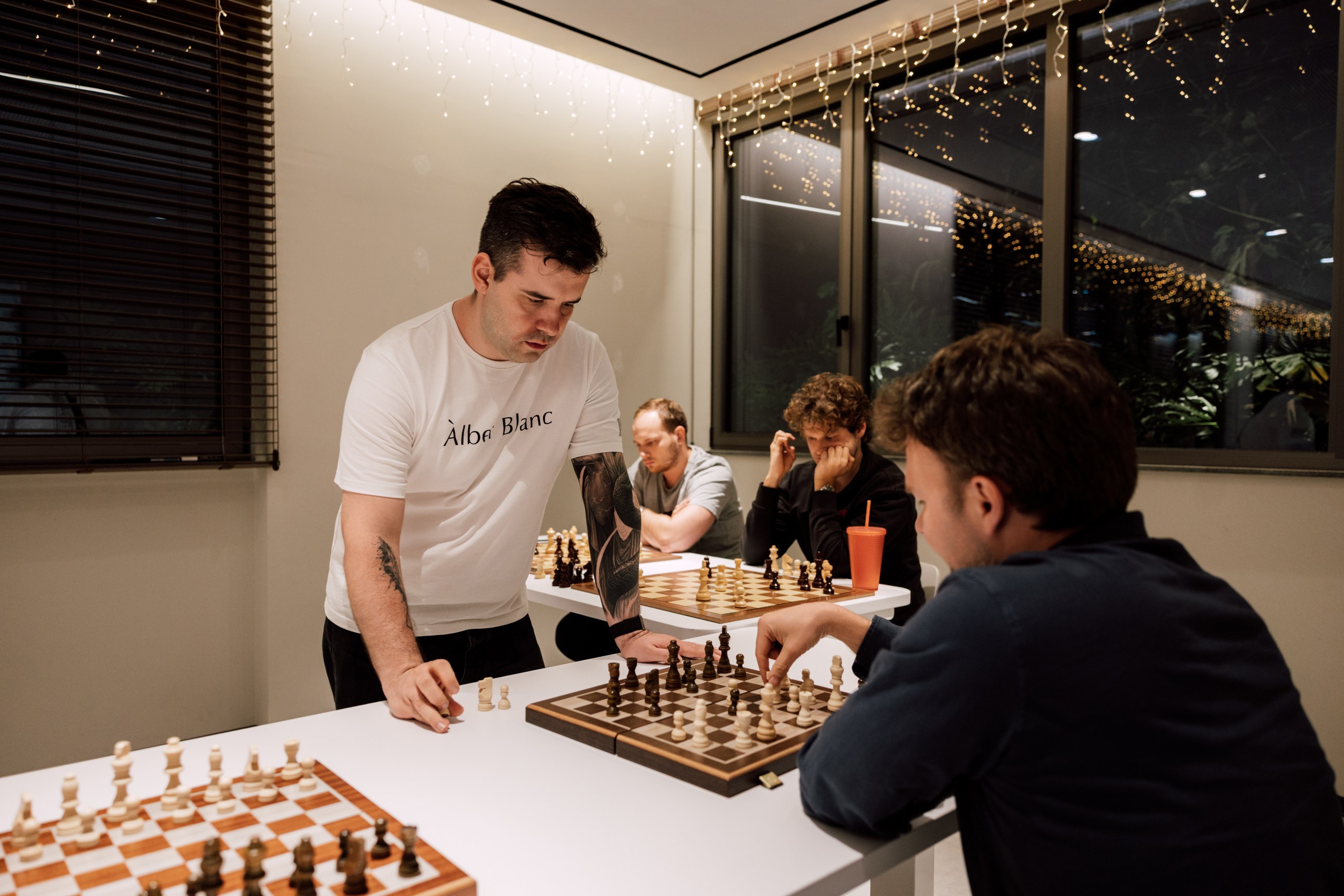
On April 10, our Limassol office turned into something slightly different from the usual working environment.
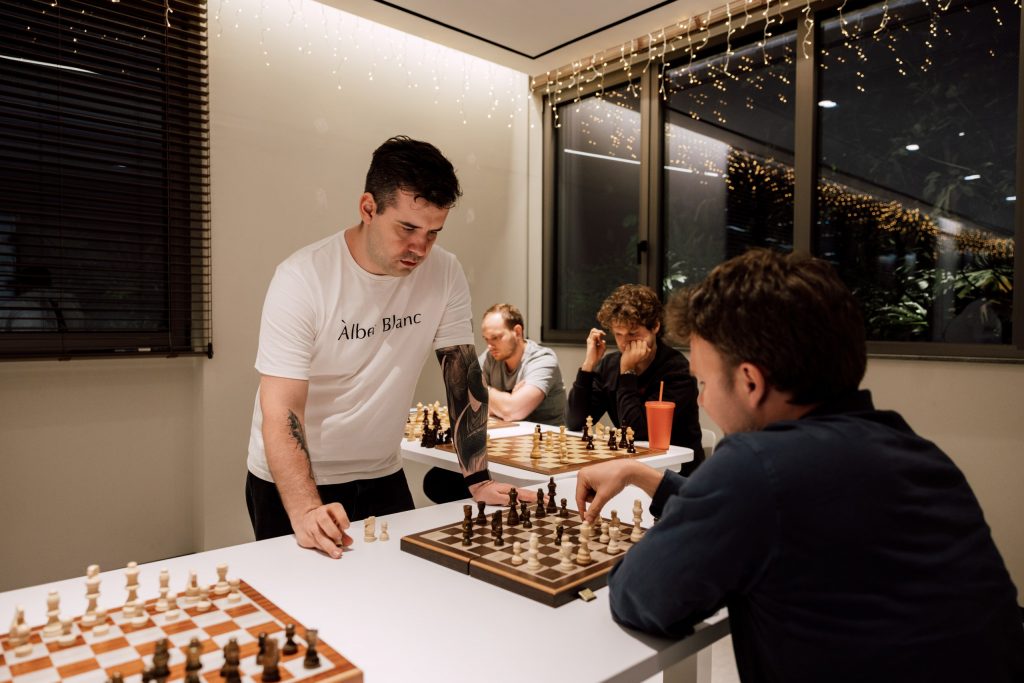
Ian Nepomniachtchi — our friend and partner — spent the evening with the Alber Blanc team, starting with a simultaneous exhibition and finishing with an open Q&A.
The setting was informal, but the energy was familiar: people used to thinking under pressure, asking precise questions, and staying curious about how decisions are made — whether on a chessboard or elsewhere.
A different kind of game
The evening started with a quiz — a small icebreaker that determined the order for choosing boards. Then the real games began.

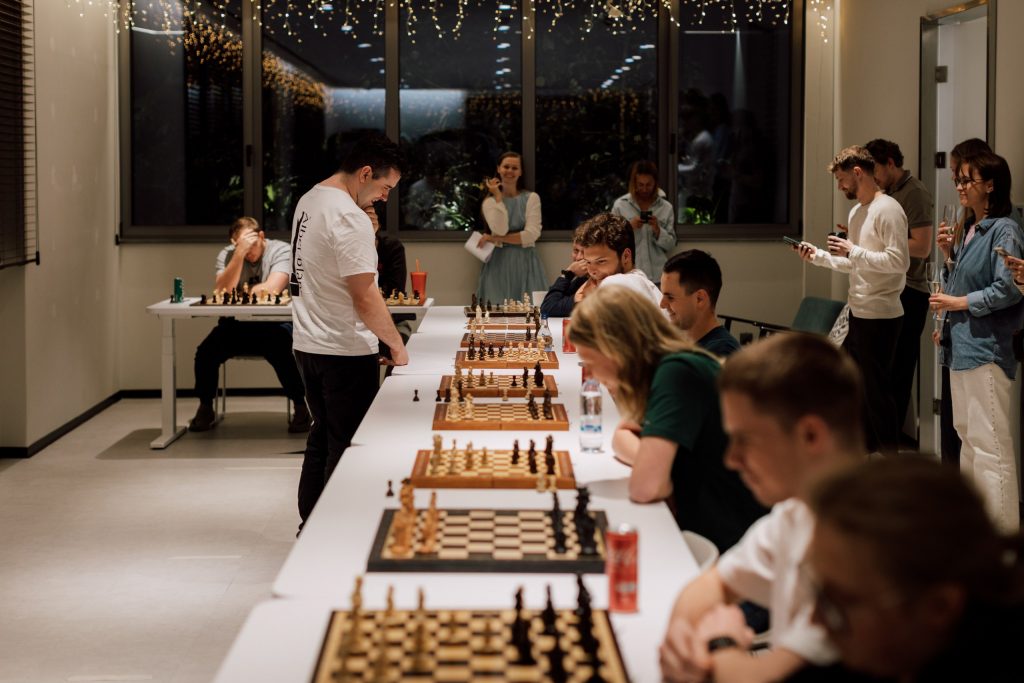
In the simultaneous exhibition, Ian played multiple games in parallel, moving between boards while the room followed closely. Some games resolved quickly, others stretched longer, with a few participants holding their ground deep into the session.
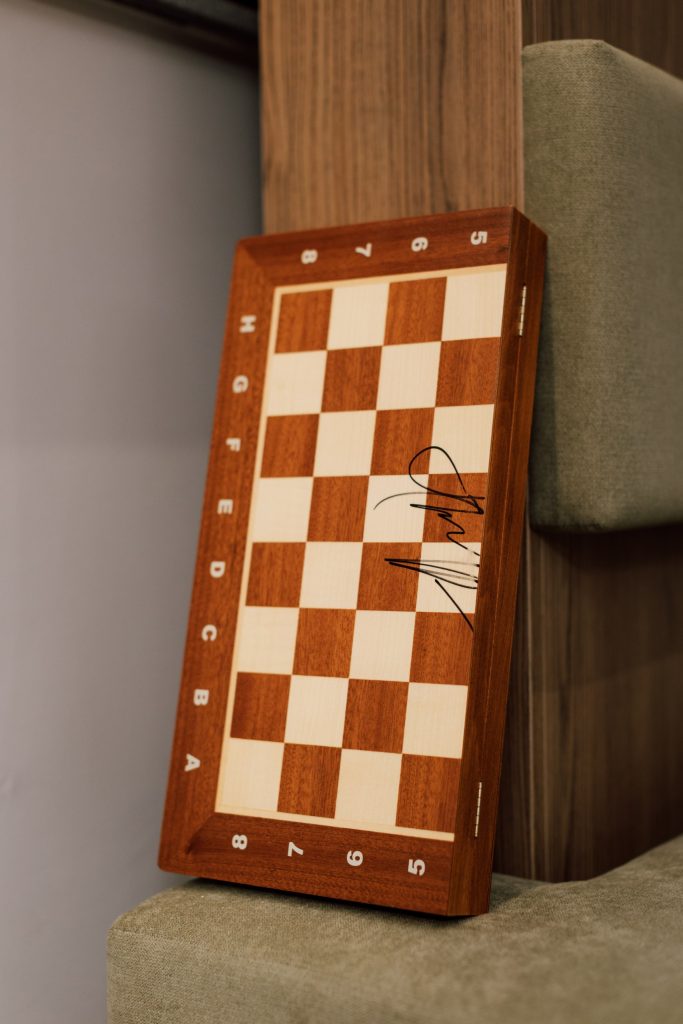
Three of them stayed in the game the longest — and received signed boards from Ian, the same ones they played on, as a small memento of the evening.
Questions that matter
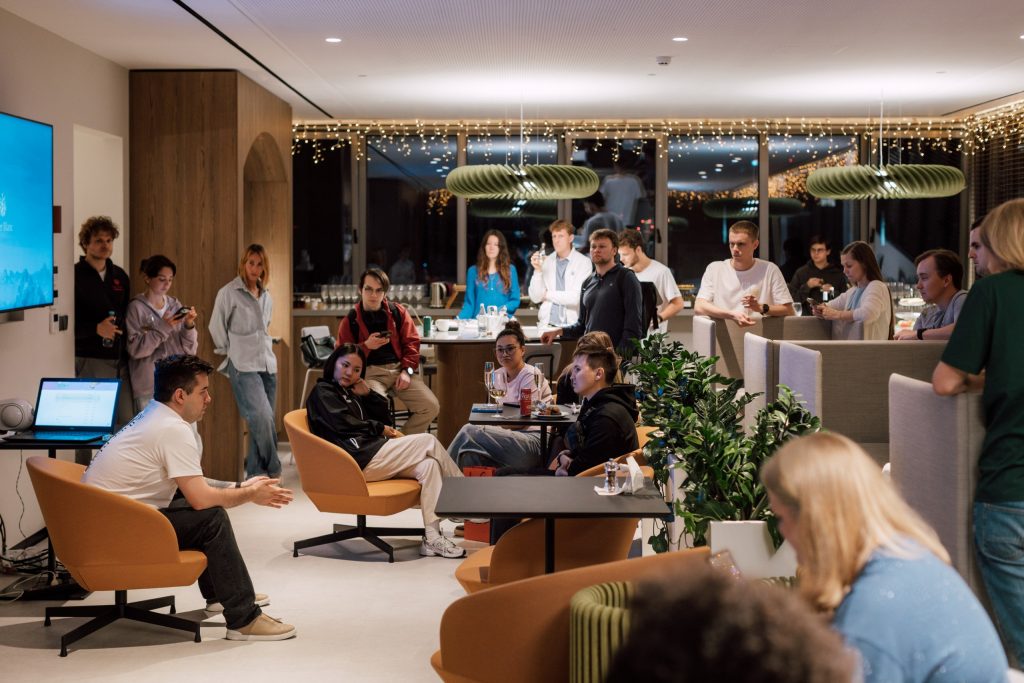
The Q&A followed naturally. We talked about Ian’s path into professional chess, how preparation evolves at the highest level, and what it takes to stay composed when every move is visible and evaluated. There were also reflections on top-level competition — insights that only come from being inside that environment.
As Ian put it:
“You don’t always need perfect moves to win, you need to keep making good decisions, even when the position isn’t clear.”
What stood out was how transferable these ideas are. The same questions apply outside of chess: how to make decisions with incomplete information, how to stay focused under time pressure, how to keep thinking clearly when the stakes are high.
Why this fits
Most people in our team have a natural affinity for structured, strategic thinking. Chess fits into that space almost naturally. It’s another way to explore the same patterns of thinking: precision, adaptability, and the ability to operate under constraints.
What’s next
This evening is part of our ongoing work with Ian, with more to come — both online and in Cyprus. We’ll share more soon.
If you think in systems, solve hard problems under pressure, and see complexity as something to explore — we’re probably speaking the same language. We’re always looking for engineers and quants who think this way.
Explore opportunities on our careers page or connect with us on LinkedIn.